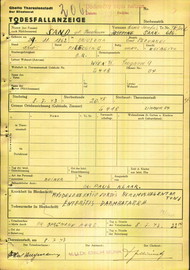

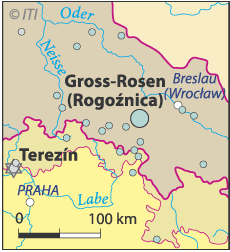
Přibližně 60 kilometrů jihozápadně od Wrocławi se nacházel koncentrační tábor Gross-Rosen (polsky Rogoźnica). Byl založen v létě 1940, původně jako pobočka tábora Sachsenhausen, v sousedství granitového lomu. O necelý rok později, 1. května 1941 se stal Gross-Rosen samostatným koncentračním táborem, který fungoval až do února 1945. Ve funkci jeho velitel se vystřídali Arthur Rödl, Wilhelm Gideon a Johannes Hassebroock. Zpočátku byli vězňové tábora využíváni na práci v lomu, který vlastnila společnost SS-Deutsche Erd und Steinwerke GmbH, a při budování samotného tábora. Postupně vznikly další pobočné tábory v okolí. Počet vězňů v táboře neustále rostl, z přibližně jednoho a půl tisíce v roce 1941 až na téměř sto tisíc v době likvidace tábora. Celkový počet lidí vězněných během druhé světové války v táboře Gross-Rosen se blíží 125 tisícům obětí různých národností. Největší skupinu mezi nimi představovali Židé. Odhaduje se, že smrt zde nalezla asi třetina všech vězňů. Životní a pracovní podmínky židovských vězňů pod dozorem sadistických nacistických strážců byly obzvlášť kruté a nelidské. Těžká práce za velmi malých přídělů potravin způsobovala vysokou úmrtnost. Židovským vězňům bylo odpíráno lékařské vyšetření a bylo jim zakázáno mluvit s ostatními vězni.

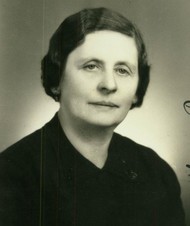
SS-Obersturmbahnführer Arthur Rödl, velitel koncentračního tábora Gross-Rosen v letech 1941 - 1942. (Foto: KZ Gedenkstaette Dachau, courtesy of USHMM Photo Archives.)
Koncem roku 1943 byly po dvanácti měsících obnoveny transporty Židů do Gross-Rosenu a jeho přibližně padesáti pobočných táborů v Dolním Slezsku a Sudetech. Tentokrát se jednalo o početnější skupiny vězňů, v nichž do sítě táborů spadajících pod Gross-Rosen přijelo 60 tisíc Židů, většina z nich z Polska a Maďarska. Židé byli nasazeni na práci v německých továrnách Krupp a I. G. Farben. Část vězňů z poboček Gross-Rosenu byla nasazena také na výstavbu Hitlerovy podzemní pevnosti.
S první fází likvidace tábora Gross-Rosen a jeho podtáborů
začali nacisté koncem ledna 1945. Vězňové mužských
satelitních táborů na východním břehu Odry byli přesunuti do hlavního tábora, ženské vězenkyně šly v tzv. pochodech
smrti většinou do táborů hluboko v Říši. Mnoho vězňů během těchto pochodů zemřelo nebo bylo zabito, osud několika
takových pochodů zůstává stále neznámý. K evakuaci dalších poboček a hlavního tábora Gross-Rosen došlo začátkem
února 1945. Část Židů (zejména žen) byla transportována do Bergen-Belsenu, další do Buchenwaldu, Dachau, Flossenbürgu,
Mauthausenu
a Mittelbau. Posledních pár vězňů, kteří zůstali v pobočných táborech do konce války, osvobodili sovětští
vojáci 8. a 9. května 1945.

Kamenolom v Gross-Rosenu, v němž vězni pracovali, 1940 - 1945. (Foto: KZ Gedenkstaette Dachau, courtesy of USHMM Photo Archives.)
 Tisk
Tisk